

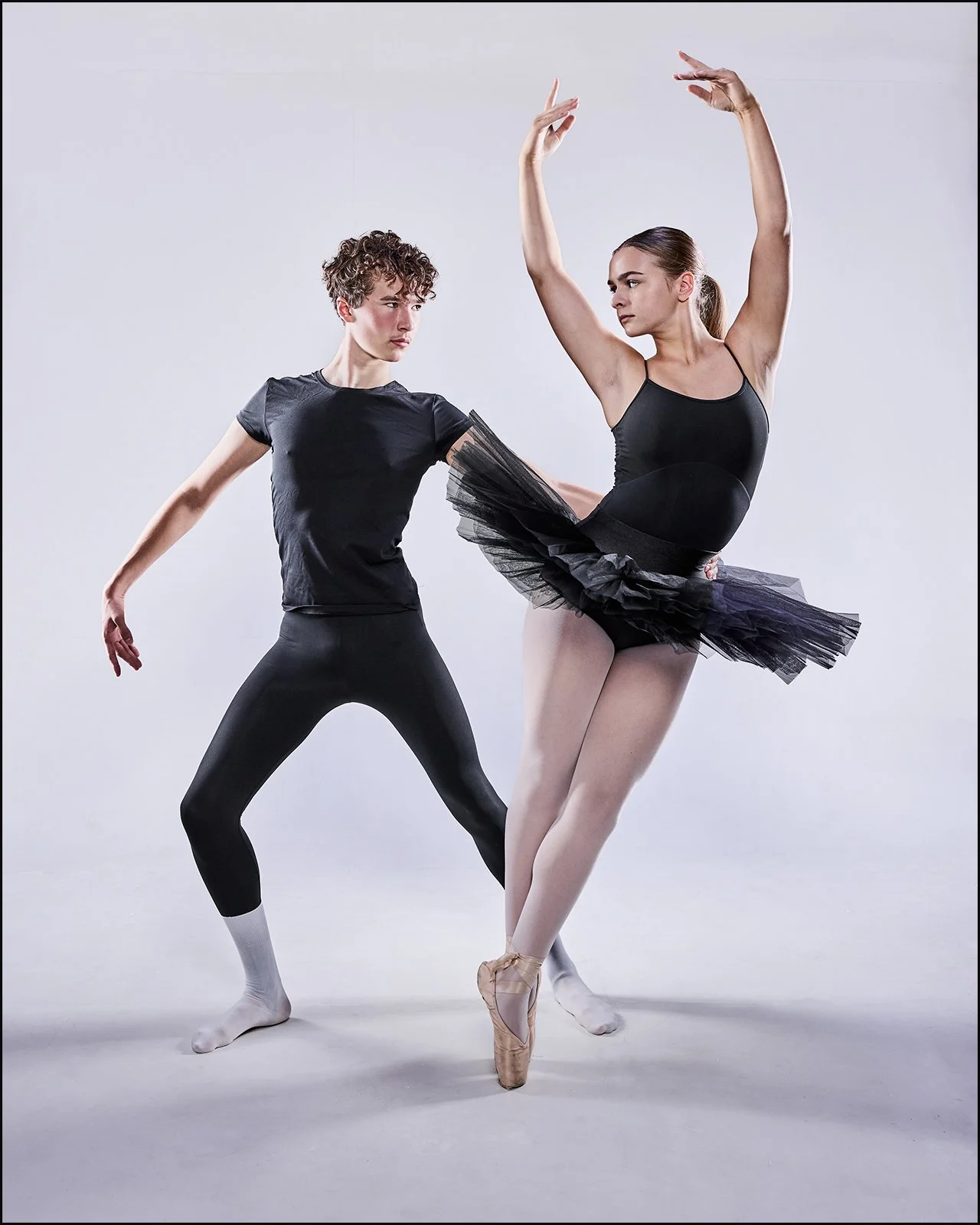
How I Saved My Dance Photography Shoot (When Everything Went Wrong)
As it turns out, booking a photo studio for a full eight hours requires a modest degree of forward thinking and meticulous planning, two pillars of human competence that have remained, throughout my life, stubbornly elusive. For reasons I cannot quite fathom, my professional creative career has relied almost entirely on the belief that everything will simply be “alright on the night.” Remarkably, through some sort of cosmic oversight, it usually is.
Having earmarked an entire day in my diary to immerse myself in the high octane, gravity defying world of dance photography, I immediately ran into something of a snag.
As it turns out, booking a photo studio for a full eight hours requires a modest degree of forward thinking and meticulous planning, two pillars of human competence that have remained, throughout my life, stubbornly elusive. For reasons I cannot quite fathom, my professional creative career has relied almost entirely on the belief that everything will simply be “alright on the night.” Remarkably, through some sort of cosmic oversight, it usually is.
Fate, however, had clearly taken umbrage at my breezy approach to studio scheduling and decided it was high time I was taught a stern lesson.
Planning a Photoshoot: Conception vs. Reality
Having conceived the initial idea, booked the studio space, and painstakingly designed a promotional poster by hand (a miraculous feat without AI assistance, I assure you), I was ready to launch the campaign and watch client bookings roll in.
It was precisely at this moment that my education in creative humility began.
What started as a mild tickle in the throat rapidly mutated into a full blown, catastrophic case of "man flu." This was not a mere cold; it was the sort of agonizing affliction that leads even the most stout hearted photographer to prepare for an impending meeting with his maker.
Rescuing the Shoot: Collaborating with Local Dance Talent
Against all medical odds, I managed to wriggle free from Death’s icy grip with just days to spare. I promptly dispatched a grovelling message to Laura over at the L&C Collective, begging to know if any of her dancers might take pity on a desperate photographer.
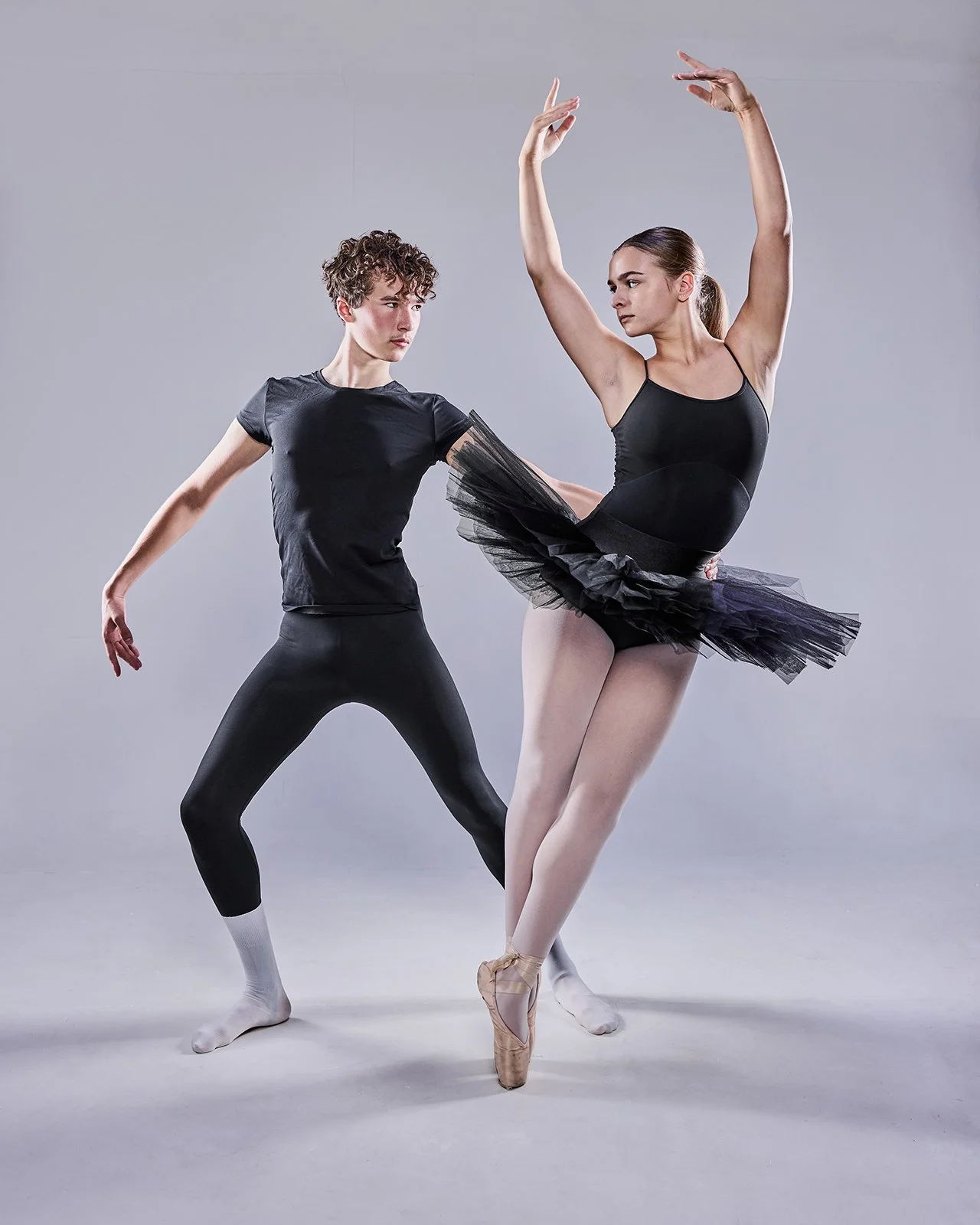
To my overwhelming relief and eternal gratitude, Ellis and Lucy agreed to step into the breach.
Capturing Action & High Speed Dance Photography
And what an absolute joy it was. Working with skilled performers completely changed the dynamic of the shoot.
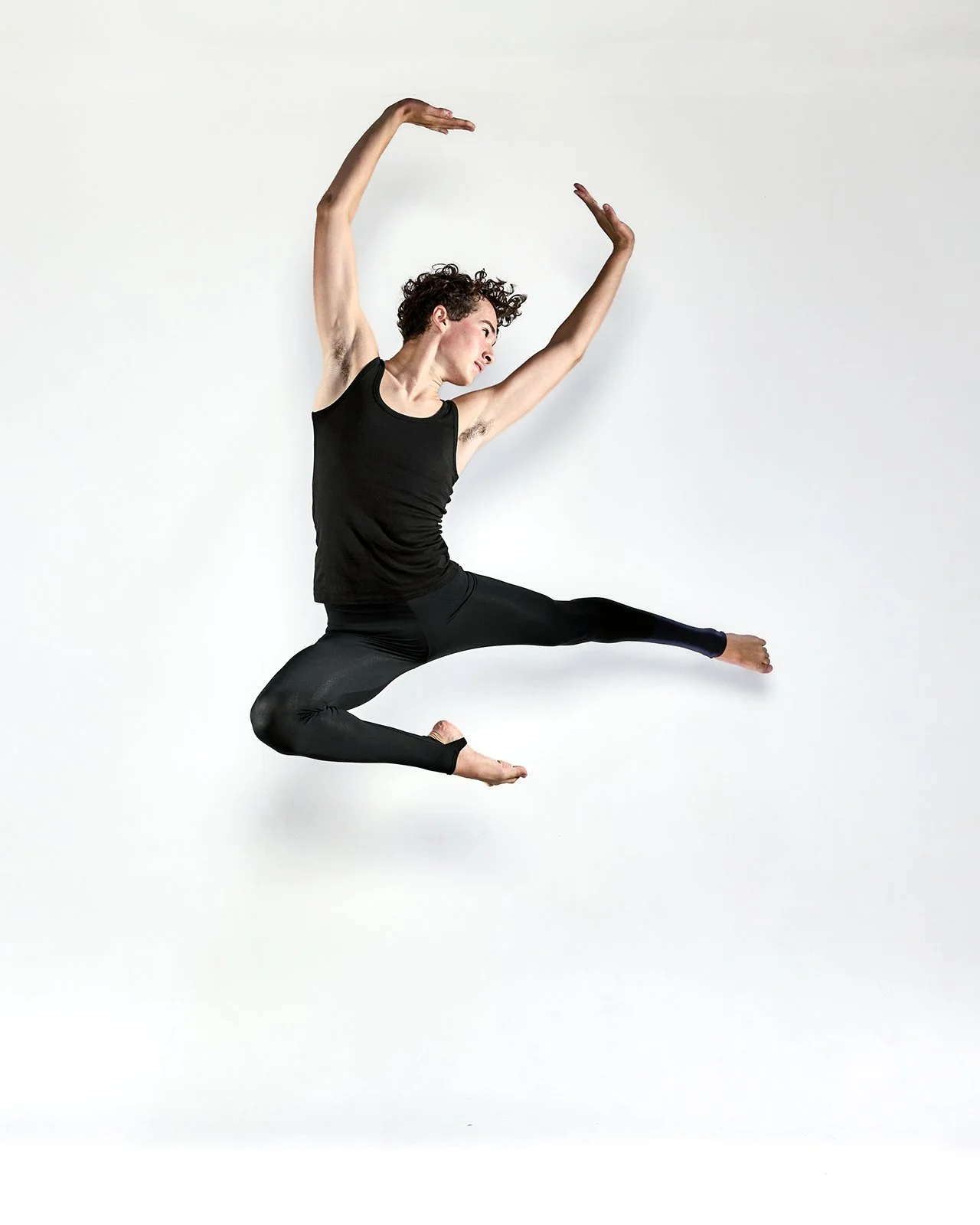
The two of them proceeded to execute a series of spectacular leaps and kicks that appeared to violate several fundamental laws of Newtonian physics:
Freezing Motion: Timing shutter speeds to catch peak elevation mid-leap.
Composition: Framing high energy movement within a controlled studio lighting setup.
Expressive Form: Translating athletic control into striking visual art.
The resulting images truly showcase their extraordinary talent, dedication, and athleticism.
Final Thoughts
A massive thank you to Ellis, Lucy, and Laura for turning a potential scheduling disaster into a fantastic portfolio session. Who knows? Next time, I might even try planning ahead.
The Perils, Pains, and Peculiarities of Photographing Great Staple Tor
Fast forward to last week. Having once again completed the gruelling trudge to the top, my heart sank into my boots as I crested the Tor. There, poking ominously above the granite rocks, was the distinct, flexible outline of a tent pole.
Thankfully, this scene was less rural rave and more Carry On Camping (minus the flying bra, I should hasten to add). But with the sun slowly descending and painting the sky in a exceedingly promising shade of amber, I was utterly determined not to leave empty handed again
There is a particular brand of madness unique to professional landscape photography. It involves voluntarily hauling thirty pounds of metal and glass up a sheer, rain slickened English hill, all for the distinct privilege of standing in a gale while waiting for a sun that has no intention of showing its face. I have visited Great Staple Tor on Dartmoor more times than my cardiologist would care to know, and the location has rewarded me with little more than lung busting disappointment.
My most recent calamity occurred a few months back. Having wheezed, groaned, and dragged my protesting frame to the summit, I was prepared to capture the glorious, unspoiled majesty of Devon. Instead, I was greeted by Dartmoor’s answer to The Hangover. A small cluster of youth, and let us be honest, everyone looks unnervingly young to me these days, were enjoying a rather spirited evening. The scene was punctuated by a minor mountain of empty lager cans and a single, surprisingly plump cigarette that was being passed around with communal enthusiasm. While a gritty urban photographer might have swooned at this tableau of rustic excess, it was not quite the sweeping, pristine wilderness I had envisioned for my portfolio.
Undeterred, or perhaps merely too foolish to know when I am beaten, I made the gruelling trudge up the Tor once again a few weeks later. As I crested the summit, my heart sank directly into my walking boots. Sprouting ominous and unmistakable above the ancient granite was the flexible fiberglass spine of a tent pole.
Thankfully, this episode proved less rural rave and more Carry On Camping (though without the legendary airborne bra, I should hasten to add). But with the sun slowly dipping toward the horizon and painting the cloud cover in remarkably promising shades of crimson, I was damned if I was going empty handed again.
Refusing to resort to digital trickery, I was forced into an extreme low angle composition to shoot past the campsite. This required assuming a crouch that I am reasonably certain violates several Geneva Conventions on cruel and unusual punishment. The sun, sensing my agony, seemed to slow its descent to a glacial crawl, apparently delighting in the spectacle of an overweight photographer squatted in a position that would make a seasoned yoga master wince.
Eventually, the shutter clicked, and the frame was secured. All that remained was the agonizingly undignified process of returning my spine to a vertical position. This was accompanied by a string of choice, industrial-strength expletives, along with a cheery, apologetic wave to two thoroughly startled campers who had just unzipped their tent to witness a grown man cursing at a rock.
How to Shoot Sunset at Great Staple Tor (Without the Pain)
If you're planning your own photographic pilgrimage to Dartmoor's iconic granite peaks, a few practical tips can help you avoid my misadventures:
Composition Hacks: When unwanted elements (campers, fence posts, or stray beer cans) invade your frame, try shooting from a ultra low perspective using a wide angle lens. This allows you to use foreground rocks to naturally block distractions while emphasizing the massive scale of the Tor.
The Climb: Park at the pork-pie shaped car park near Merrivale on the B3357. The hike up Great Staple Tor is short (under a mile), but it is steep, uneven, and guaranteed to test your cardiovascular limits. Wear sturdy boots with good ankle support.
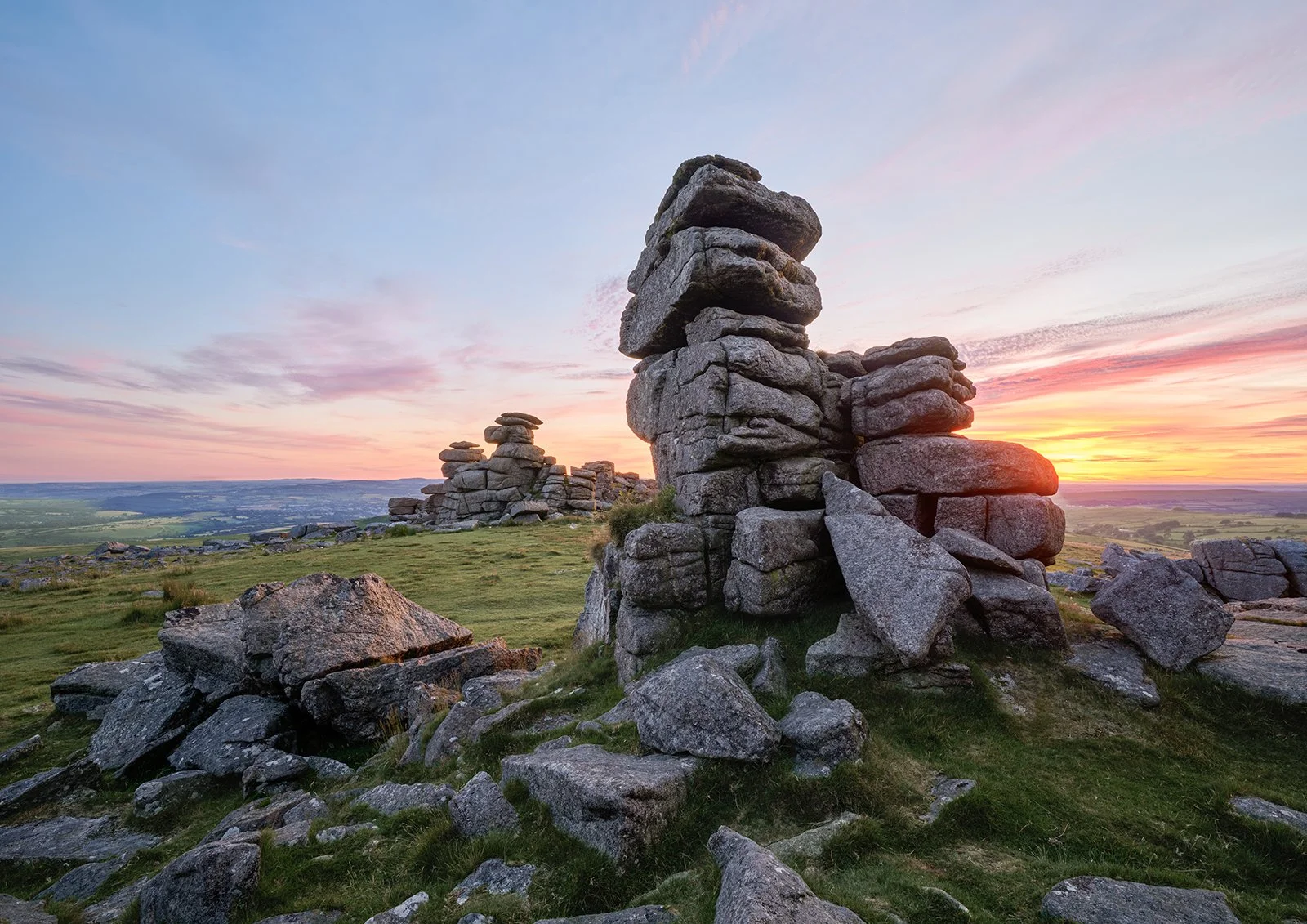
Best Light: Sunset is unquestionably the prime time for Staple Tor. The setting sun lights up the western faces of the granite stacks with a brilliant golden orange glow, ideal for dramatic wide-angle compositions
Dramatic sunset behind granite rock towers at Great Staple Tor, Dartmoor.
A Chaotic, Glorious Month of Stage & Dance Photography
People often ask me whether I prefer theatre photography or dance photography. To which I say: How does one choose between a lovely cup of tea and a brisk walk through a hurricane? They are entirely different beasts.
Photographing live dance is fundamentally an exercise in defying the laws of physics. It’s about freezing a fleeting micro second of kinetic energy, capturing a high leap at the exact moment gravity seems to take a short tea break.
Ah, July. That most treacherous of months when the British calendar conspires to drag innocent, peace loving individuals away from the god given right to a hot dinner and thrust them into the dimly lit, mildly frantic universe of amateur theatre photography.
In the grand and inexplicably chaotic cosmic tapestry of MJC Photography, July is universally recognized as Show Month, a time when sleep becomes an abstract theoretical concept and one’s camera gear begins to feel less like professional equipment and more like a set of heavy iron weights designed to test a human’s mental fortitude.
Act I: The Emotional Rollercoaster of West Side Story
We kicked off this month of stage photography with West Side Story, a production that was, quite frankly, an absolute emotional rollercoaster.
One minute you're marvelling at the choreography through the viewfinder; the next, you're deeply concerned for the vocal cords of a teenager who is giving it their absolute all while wearing a remarkably convincing 1950s leather jacket.
Act II: The Great Culinary Betrayal & Emergency Theatre Shoot
The following week offered up an abundance of drama, though I regret to inform you that the most harrowing scene did not actually take place on stage.
There I was, floating merrily down the highway in the soothing, bumper to bumper bliss of British rush hour traffic. My mind had comfortably uncoupled itself from reality and was happily floating toward a future that involved a magnificent, freshly cooked dinner. Life was good.
Then, the phone rang. It was Laura of LS Drama workshops.
"How far away are you?" she asked.
Now, those five words delivered in a tone that suggests someone has either left the oven on or accidentally declared war on a small European nation, are guaranteed to make an event photographer's stomach drop directly into their socks. All thoughts of a delicious meal instantly vanished, replaced by the icy grip of sudden panic.
You see, in my innocent mind, I wasn't scheduled to photograph the show until Friday night. What I had critically failed to appreciate was that the universe (via the theatre management) had concocted a completely different cast for Thursday night, and Laura wanted both captured for posterity.
The Sprint of a Lifetime
I am reasonably certain it violates several international treaties to make a person sprint through their own home, madly hoovering up camera lenses and tripods, while the glorious, taunting aroma of an unattended home-cooked meal wafts through the hallway.
Consequently, the Thursday night cast were greeted by a theatre photographer who was:
Unusually sweaty,
Decidedly hangry, and
Secretly calculating if it was socially acceptable to eat a granola bar during a dramatic monologue.
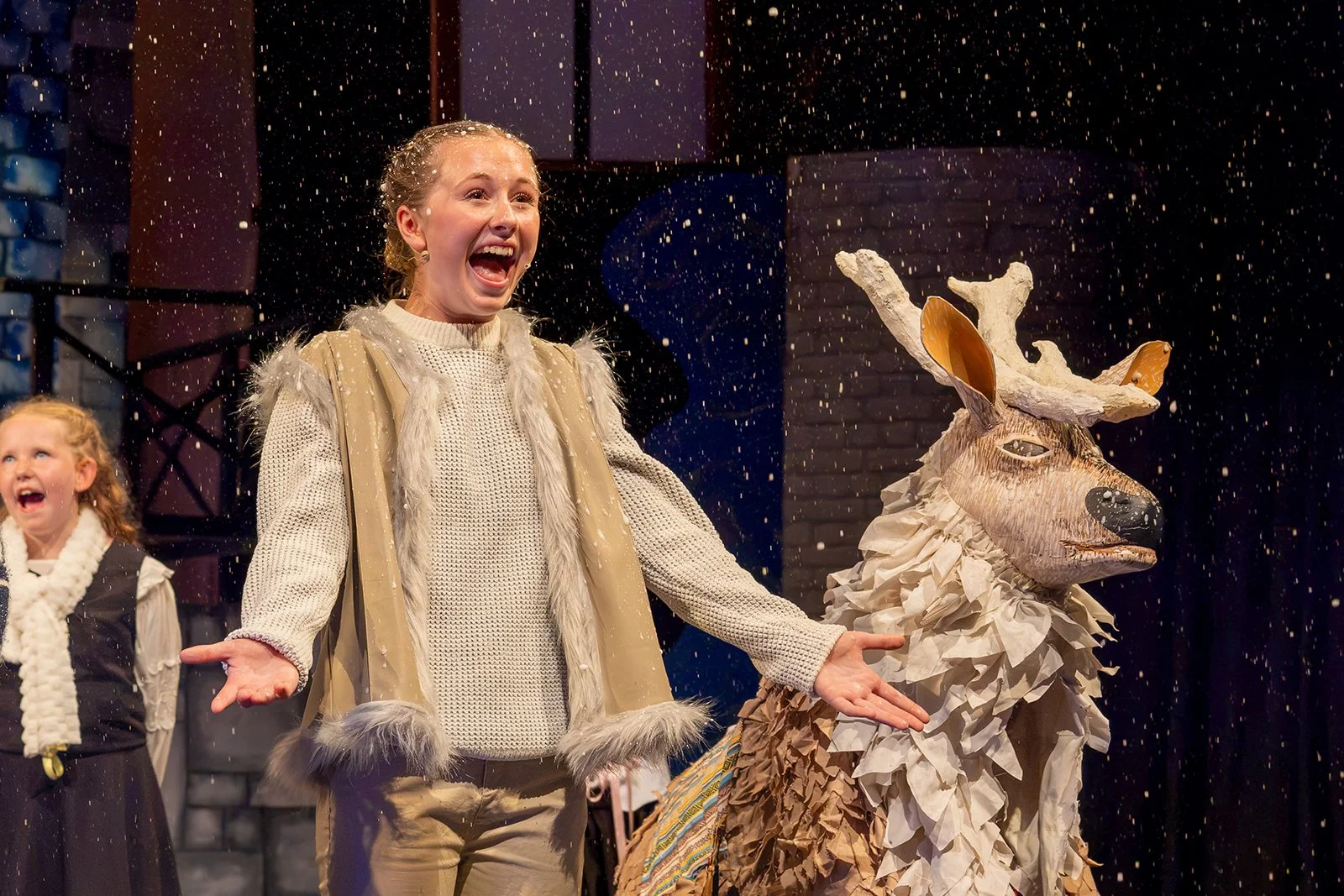
Miraculously, my visible distress did not derail the proceedings. The cast was utterly faultless, and the entire production was a visually stunning triumph, ably abetted by the splendidly dramatic lighting provided by the good folks at MB Productions.
Act III: Freezing Time with Dance Photography
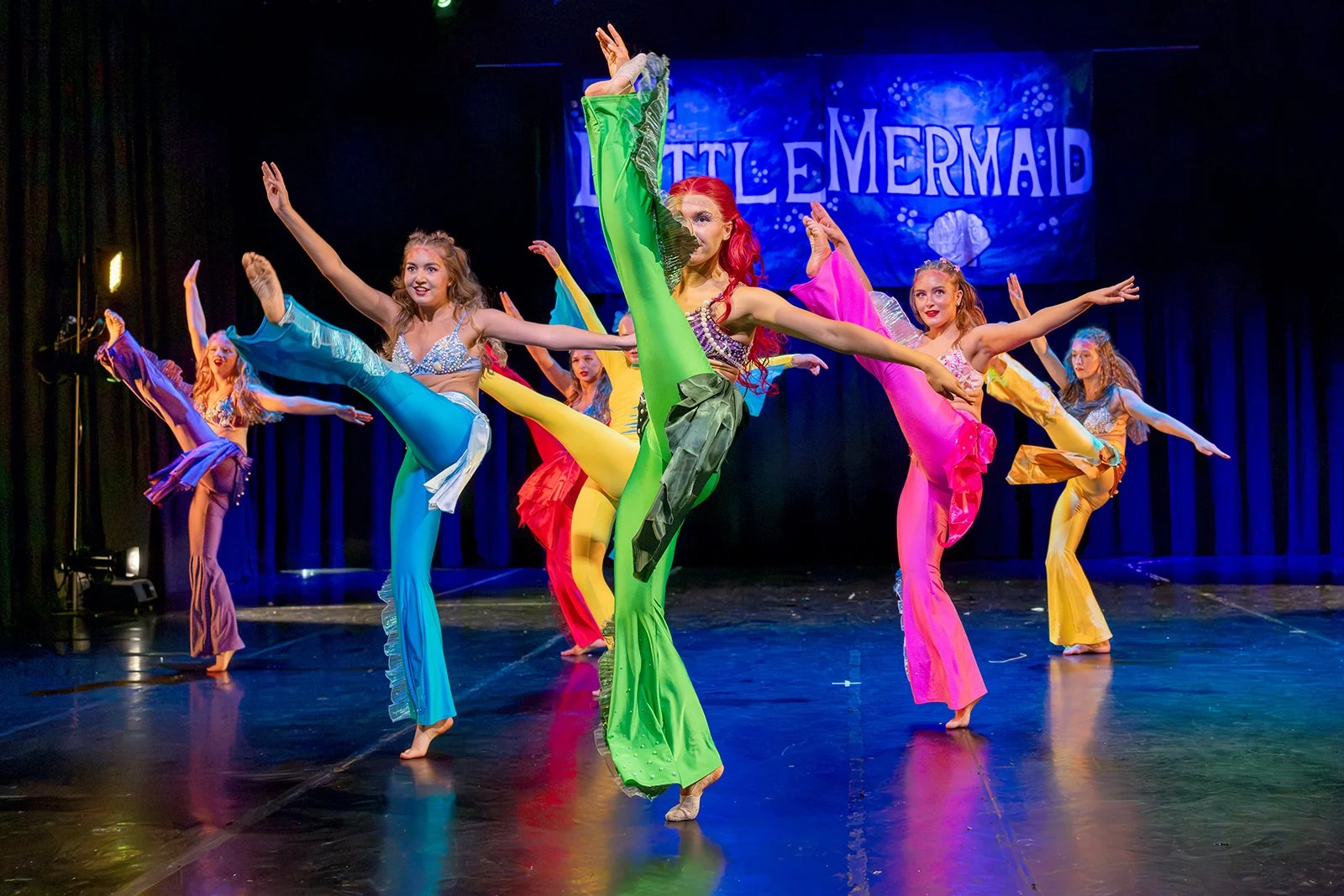
Having survived the pint sized thespians, I was promptly hurled into the breathtakingly athletic world of dance photography courtesy of the Linda Mortimore and Charlotte Smith School of Dance.
People often ask me whether I prefer theatre photography or dance photography. To which I say: How does one choose between a lovely cup of tea and a brisk walk through a hurricane? They are entirely different beasts.
Photographing live dance is fundamentally an exercise in defying the laws of physics. It’s about freezing a fleeting micro second of kinetic energy, capturing a high leap at the exact moment gravity seems to take a short tea break.
Defying Camera Settings & Stage Lighting
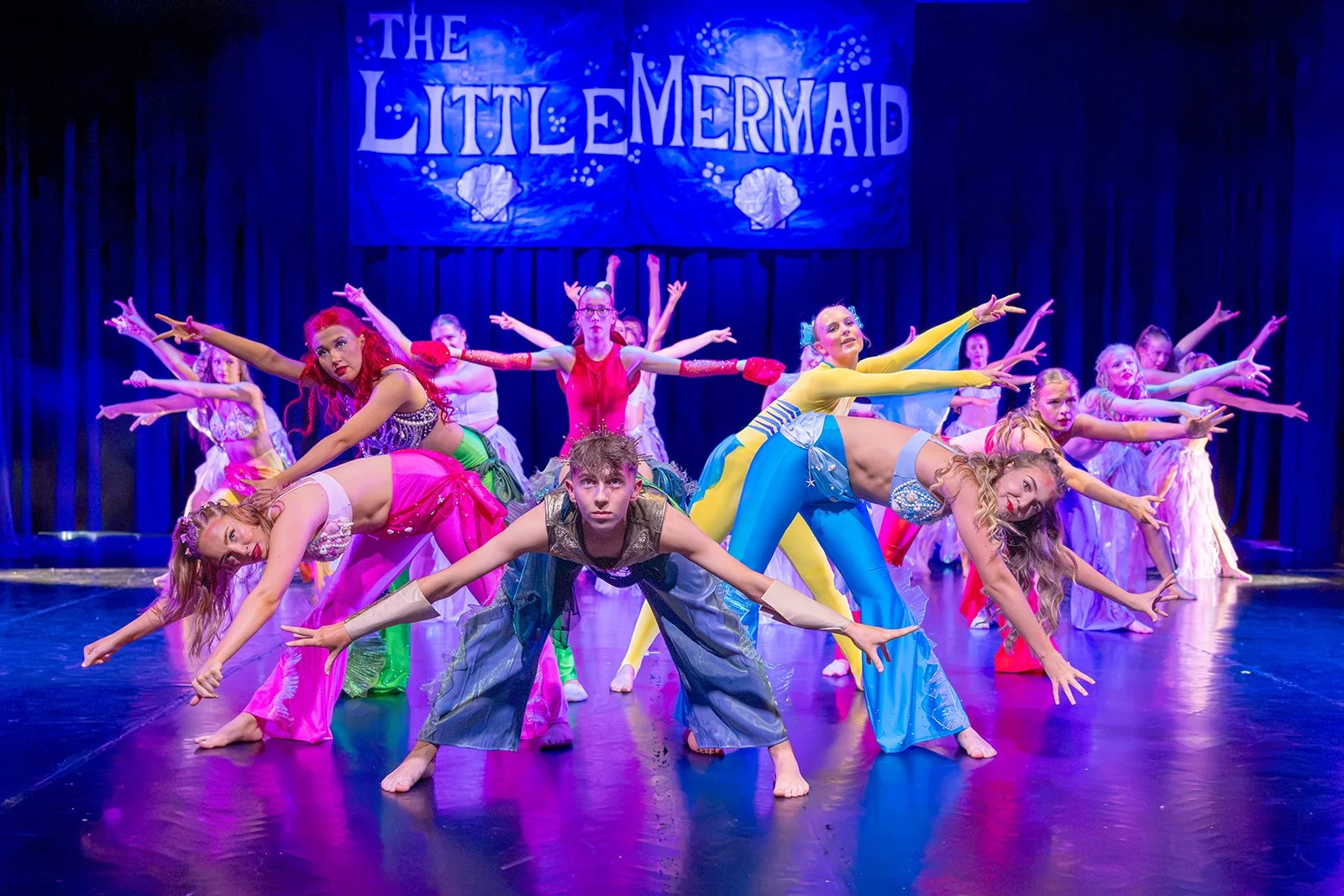
Now, while MB Productions once again provided stage lighting that was rich, dramatic, and intensely atmospheric, it was also the sort of low light environment that makes a camera sensor weep quietly in the dark. In order to catch every flying kick and high speed spin without turning the performers into blurry streaks of colour, I had to dial my camera settings up to ISO levels that would make the chief technicians at NASA tilt their heads in quiet awe.
The Final Bow
When the dust settled and the digital noise cleared, I was genuinely thrilled with the results. It is a rare privilege to document so many remarkably agile, dexterous, and endlessly energetic teenagers doing what they love (even if it does occasionally interrupt my tea time).
So, that was July: sweat, missed meals, and sheer theatrical triumph.
Now then... what on earth is August planning to throw at me?
Looking for Stage or Event Photography?
Whether you need high-speed dance performance photography or full theatre showcoverage, MJC Photography is ready for the action (and hopefully, a full meal beforehand). Get in touch today to book your show

The Physics of the Flash (Or, Why Your Phone Isn't Enough)
Most people think light is just... there. It’s what keeps you from walking into the furniture. But for a professional dance photographer, light is more like a sculptor’s chisel.
If you use the kind of flat, bright light you find in a supermarket or a particularly aggressive dentist’s office, the dancer disappears. They become two-dimensional, like a cardboard cutout. To capture the true art of movement, you need shadows. Shadows are what tell the viewer’s brain that the dancer has muscles, depth, and hasn't just been flattened by a falling piano.
Key Factors in Dance Portrait Lighting:
Directional Drama: Notice the way light falls across a face in a professional portrait. We call this "sculpting with light." By angling the light—much like the way a sunset makes even a compost heap look majestic—we highlight the grace and strength of the dancer.
The "Freeze" Factor: Dancers move fast. Faster than a rumor in a small village. To capture a ballet mid-air jump without it looking like a smudge of beige, you need high-speed lighting. This isn't just a flash; it’s a tiny, controlled explosion of precision.
Atmospheric Sepia and Mood: Sometimes, the best light isn't the brightest. A sepia-toned dance photograph evokes a sense of history and timelessness. It says, "This moment didn't just happen; it mattered."
Why MJC-Photography?
Whether it’s theatrical stage lighting or a controlled studio dance session, the goal is to make the soul of the performance visible. You can have the most talented dancer in the world, but if the lighting is wrong, you're just taking a picture of someone who looks like they’re having a very energetic argument with gravity.
In the world of creative dance photography, we don't just "take" pictures. We wait for the light to agree with the movement. It’s a bit like magic, only with more tripods and fewer frogs.
If you’re looking for high-quality dance portfolios or performance photography in Plymouth, remember: the light matters. Without it, you’re just standing in the dark. And while that’s great for hiding from creditors, it’s terrible for your Instagram.
Book your session today at MJC-Photography.com where we make sure the light always catches your best side.
The Art of the Pirouette (and Other Things I Don’t Understand)
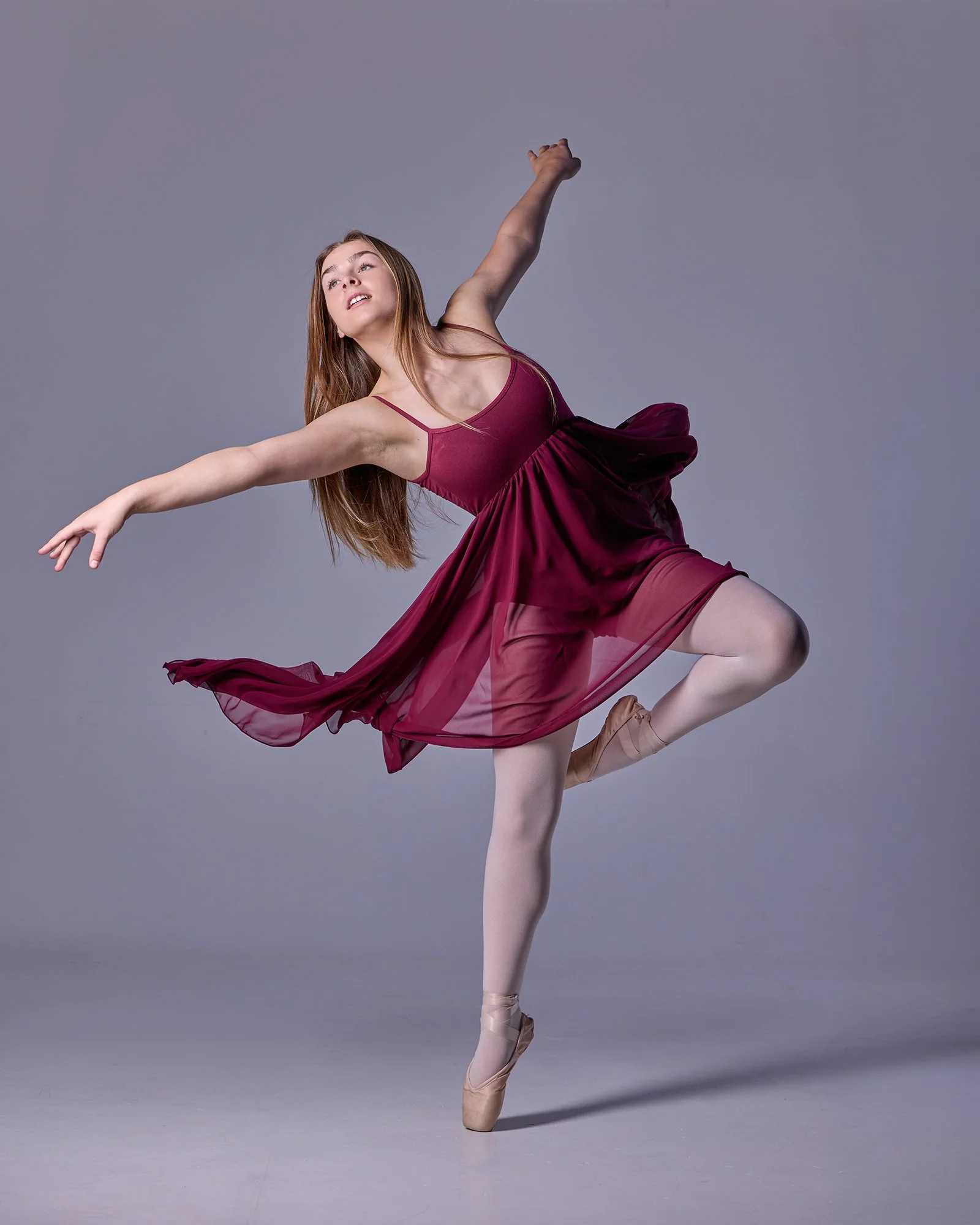
The afternoon largely consisted of me issuing a series of painfully inept, wildly metaphorical instructions, which Lucy then had to translate into something graceful. She handled my bumbling directions with the kind of weary, noble tolerance usually reserved for a Spanish waiter trying to explain a menu to a British tourist who refuses to speak anything but very loud, slow English.
Yesterday, a rather peculiar thing happened in Plymouth: the sun came out. In this corner of the world, such a meteorological anomaly usually triggers a mass migration of the local populace toward the nearest beer garden, where they sit in a state of pink shouldered delirium, clutching pints of cider and wondering what that big yellow ball in the sky is.
I, however, had managed to convince the immensely patient Tania and her remarkably talented daughter, Lucy, to forego the siren call of a liquid lunch. Instead, we spent the afternoon tucked away in my studio, a place that remained stubbornly, almost heroically, immune to the outside warmth.
Now, Lucy is a regular star of the LS DRAMA Workshops and a veteran of the theatrical stage. I’ve had the pleasure of capturing her actor’s headshots before (which, I suspect, are currently making her Spotlight profile look far more professional than anything I ever did at that age). But this particular session was a different beast entirely: we were here to capture the fluid, gravity defying world of dance.
I should confess right now that this shoot was a triumph of collaboration, mostly because I am a man of a certain vintage in possession of two left feet and a complete lack of any rhythmic sensibility. My personal vocabulary of ballet is, to put it mildly, non-existent.
The afternoon largely consisted of me issuing a series of painfully inept, wildly metaphorical instructions, which Lucy then had to translate into something graceful. She handled my bumbling directions with the kind of weary, noble tolerance usually reserved for a Spanish waiter trying to explain a menu to a British tourist who refuses to speak anything but very loud, slow English.
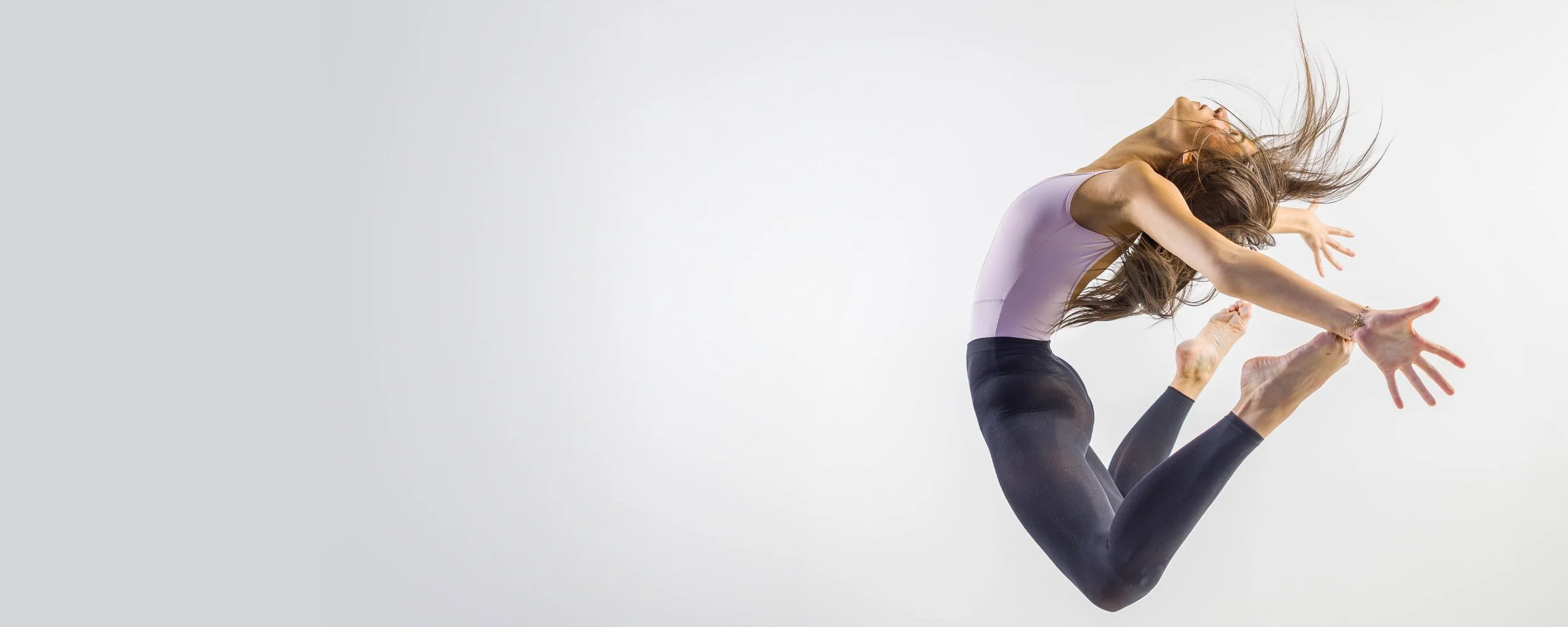
Despite my linguistic failings, the results were, if I may say so, rather splendid. Through a combination of clever lighting, some frantic camera adjustments, and Lucy’s sheer athletic prowess, we managed to capture a gallery of images that I am immensely proud of. It turns out that when you pair a talented dancer with a photographer who is mostly just relieved no one tripped over a power cable, magic happens.
I’m already looking forward to the next time a group of talented performers graces my studio. Though, next time, I might try to learn what a plié is beforehand.
Ready to capture your own moment of grace (or just a really good headshot)?
Whether you’re a dancer, a budding thespian, or just someone who needs a photo that doesn't look like a CCTV still, I’d love to help. Head over to my Studio Portraits page to schedule your session, or drop me a line at mjcplymouth@gmail.com to chat about your next project!
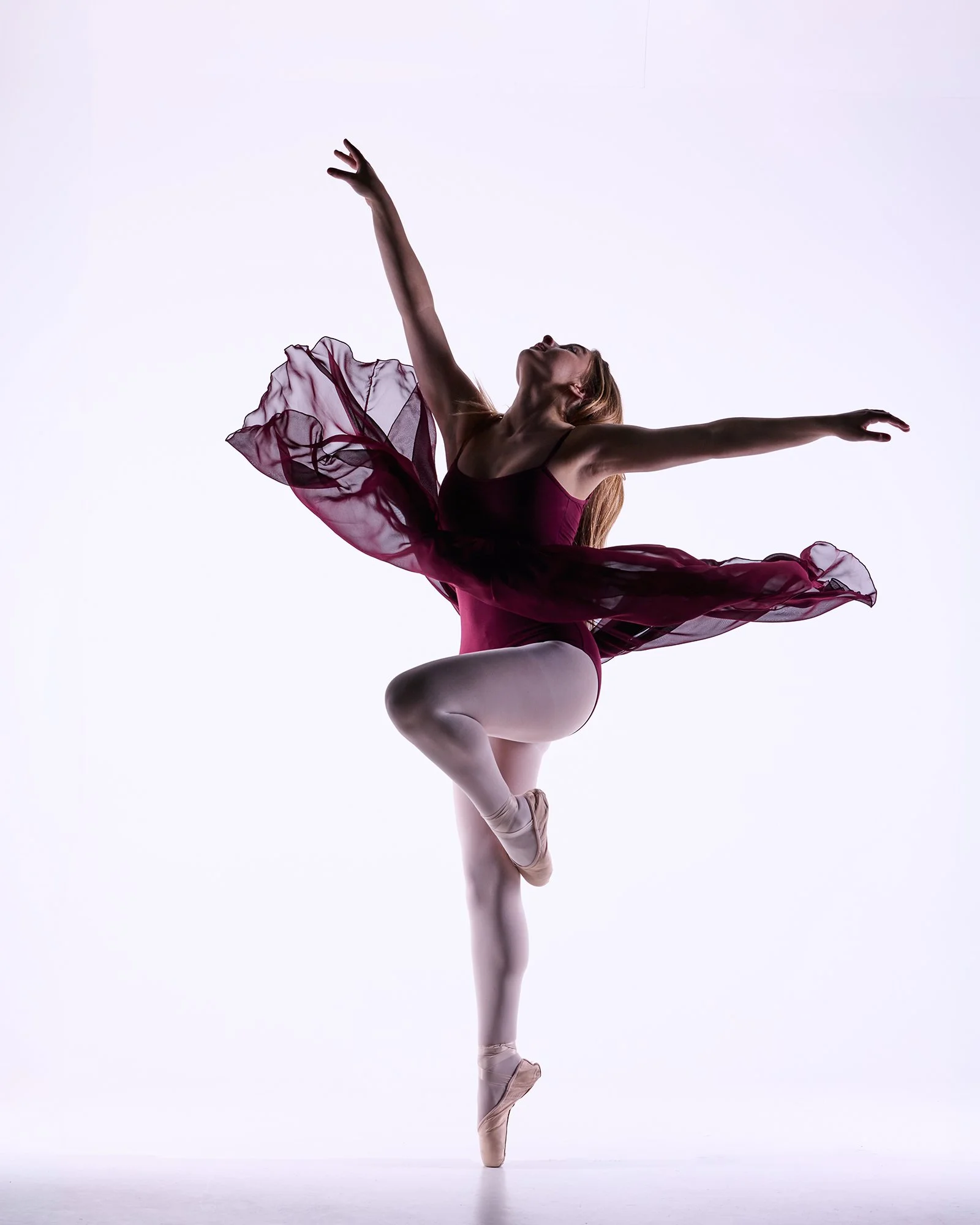
Full-length studio shot of a female dancer balanced on one toe in a classic ballet pose. She is looking upward with arms outstretched, while her sheer maroon skirt billows dramatically around her. The lighting is bright and high-key, emphasizing the silhouette and the fluid motion of the fabric.
The Indignity of Editing and the Joy of Staying Dry
Photographing dancers is a precarious business, mostly because one tends to become so mesmerized by the sheer, improbable elegance of the human form in motion that one forgets to actually, you know, take the picture. It is a genuine occupational hazard.
Interestingly, despite the leaps and bounds, my inner portrait artist seems to have taken the wheel. My personal favourite from the session is a stark, black-and-white headshot. It captures a quiet intensity that all the movement in the world can’t quite replicate.
There is something inherently noble about the landscape photographer, standing knee-deep in a freezing bog at four in the morning, waiting for a sunrise that, nine times out of ten, is obscured by a sky the colour of dirty dishwater. I have spent a significant portion of my life in such pursuits. However, since opening my new residency at Trident Studio, I have discovered a profound, almost unseemly sense of smugness that comes from being indoors.
While the British weather outside has been performing its best impression of the Old Testament, mostly "The Great Flood" portion, I have been safely ensconced in the warm, dry embrace of the studio. It is a revelation. Over the last few weeks, my shutter button has been pressed with the sort of frantic frequency usually reserved for a teenager in a particularly juicy group chat.
Portrait Photography: Making Stars and Facing Backlogs
The primary cause of this mechanical exhaustion has been a delightful parade of talented young actors. We’ve been crafting the kind of professional headshots that I hope will soon be staring down from billboards or at least convincing a casting director that this person is precisely what their next period drama is missing.
I’ve taken to muttering the phrase "MJC, Photographer to the Stars!" under my breath. It has a certain melodic quality to it, don’t you think?
The downside of all this "stardom," of course, is the editing. I am currently staring down a backlog of post-processing that would make a Hollywood production office weep with exhaustion. Every hour spent in the glow of the studio lights results in several more spent in the much less glamorous glow of a computer monitor, meticulously adjusting the stray hairs of future Oscar winners.
The Art of Motion: Dancing with Erica Mulkern
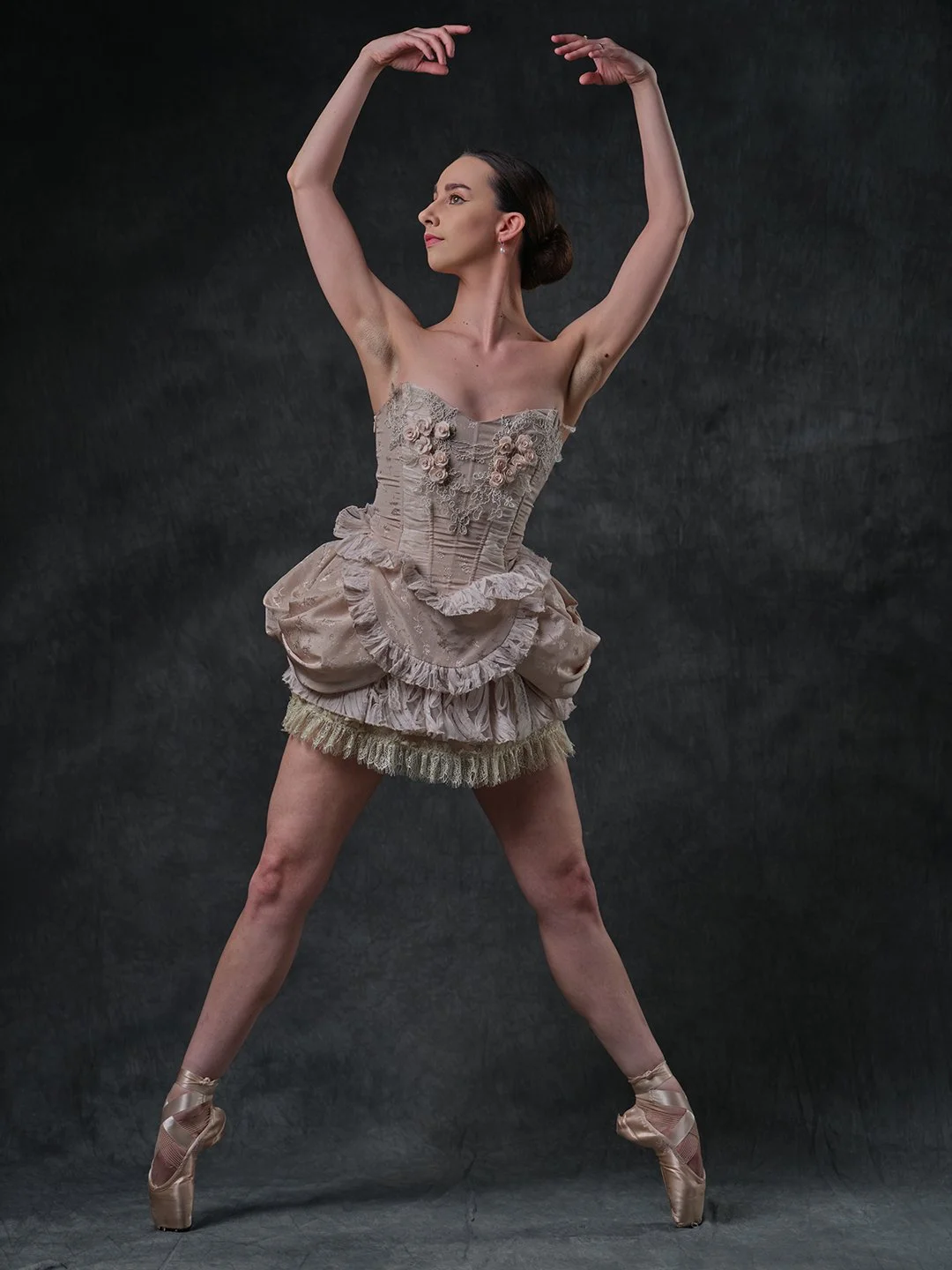
Despite the looming mountain of digital files, I couldn't resist a "busman's holiday" this past Friday. Long before this business venture began, I had booked a session with the breathtakingly talented Erica Mulkern.
Photographing dancers is a precarious business, mostly because one tends to become so mesmerized by the sheer, improbable elegance of the human form in motion that one forgets to actually, you know, take the picture. It is a genuine occupational hazard.
Interestingly, despite the leaps and bounds, my inner portrait artist seems to have taken the wheel. My personal favourite from the session is a stark, black-and-white headshot. It captures a quiet intensity that all the movement in the world can’t quite replicate.
Ready for Your Close-Up?
But enough of this. The editing suite calls, and it is a jealous mistress.
If you are looking for high-quality acting headshots or creative portrait photography that might just catch the eye of the next big casting director, and if you’d like to personally contribute to my mounting workload, I’d love to hear from you.
You can reach out right here or visit me over at mjc-photography.com. I promise to stay indoors for the duration of our session.
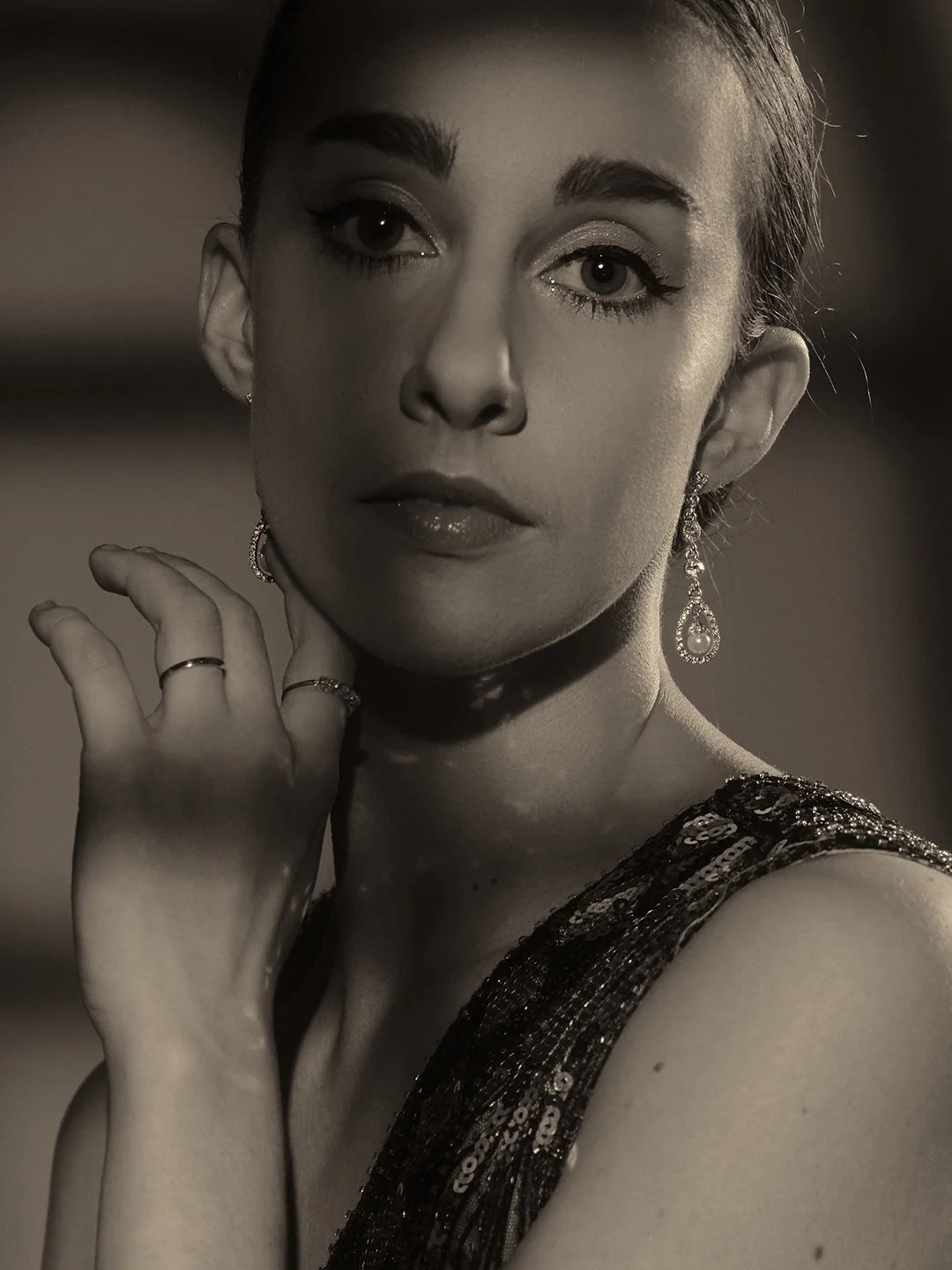
A close up, black and white portrait of a woman looking directly at the camera with a serene expression. She is wearing a dark, sequined dress and elegant drop earrings. Her hand is delicately raised to her neck, showing two rings on her fingers. The lighting is dramatic, with soft shadows and light patterns across her face and neck.
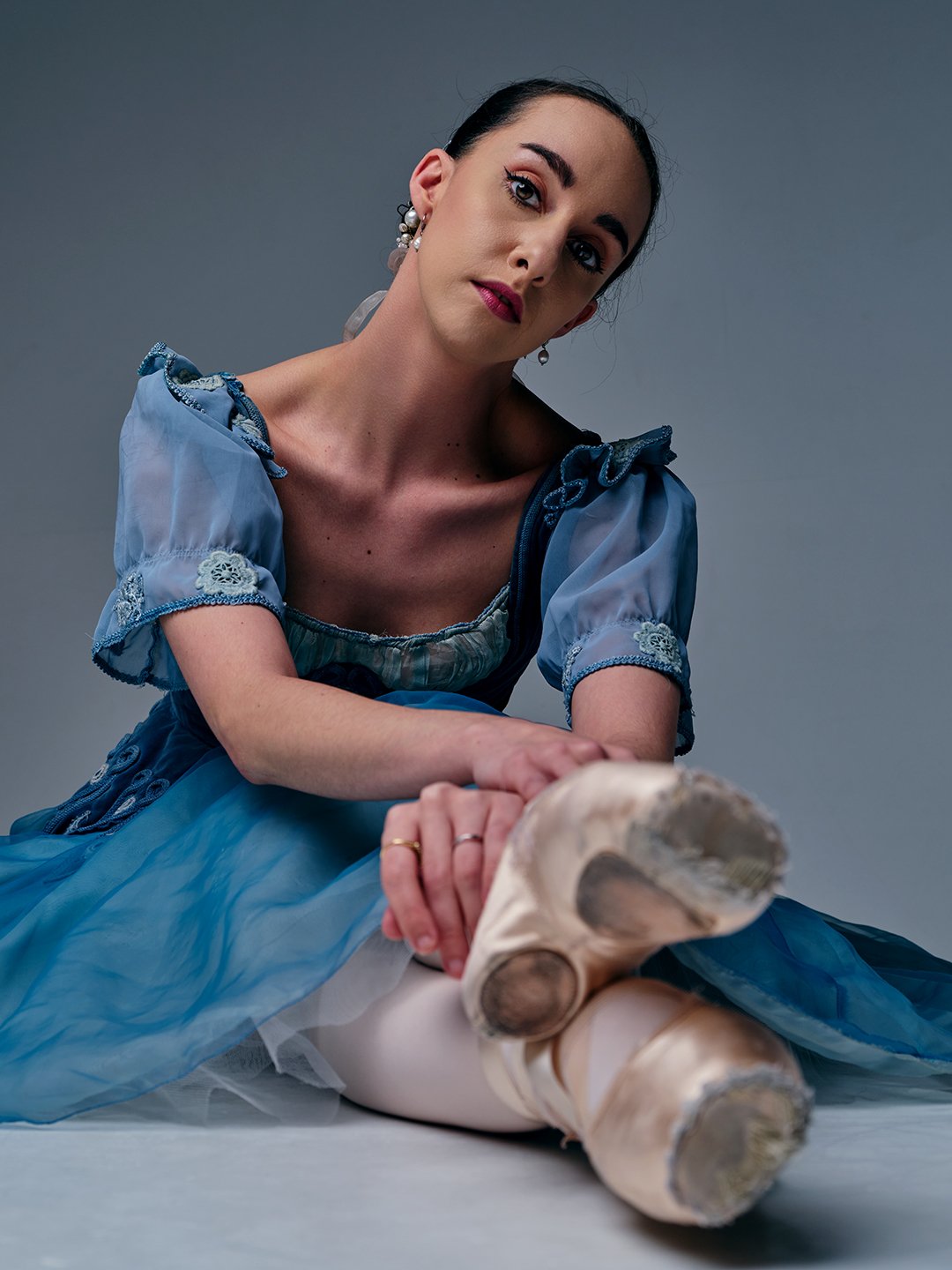
A professional studio portrait of dancer Erica Mulkern seated on the floor, wearing a delicate blue ballet costume with puffed sleeves. Her ballet pointe shoes are positioned prominently in the foreground, showing signs of wear, while she looks toward the camera with a focused expression.