

How to Photograph the National Fireworks Championship: Ultimate Guide & Camera Settings
The salt air of Plymouth Sound carries a palpable hum of anticipation. Thousands line Plymouth Hoe and drape over the cliff edges, waiting for that first jagged flash to tear across the August night sky. When the National Fireworks Championship arrives, it transforms the UK coastline into a dramatic amphitheatre of thunder and light.
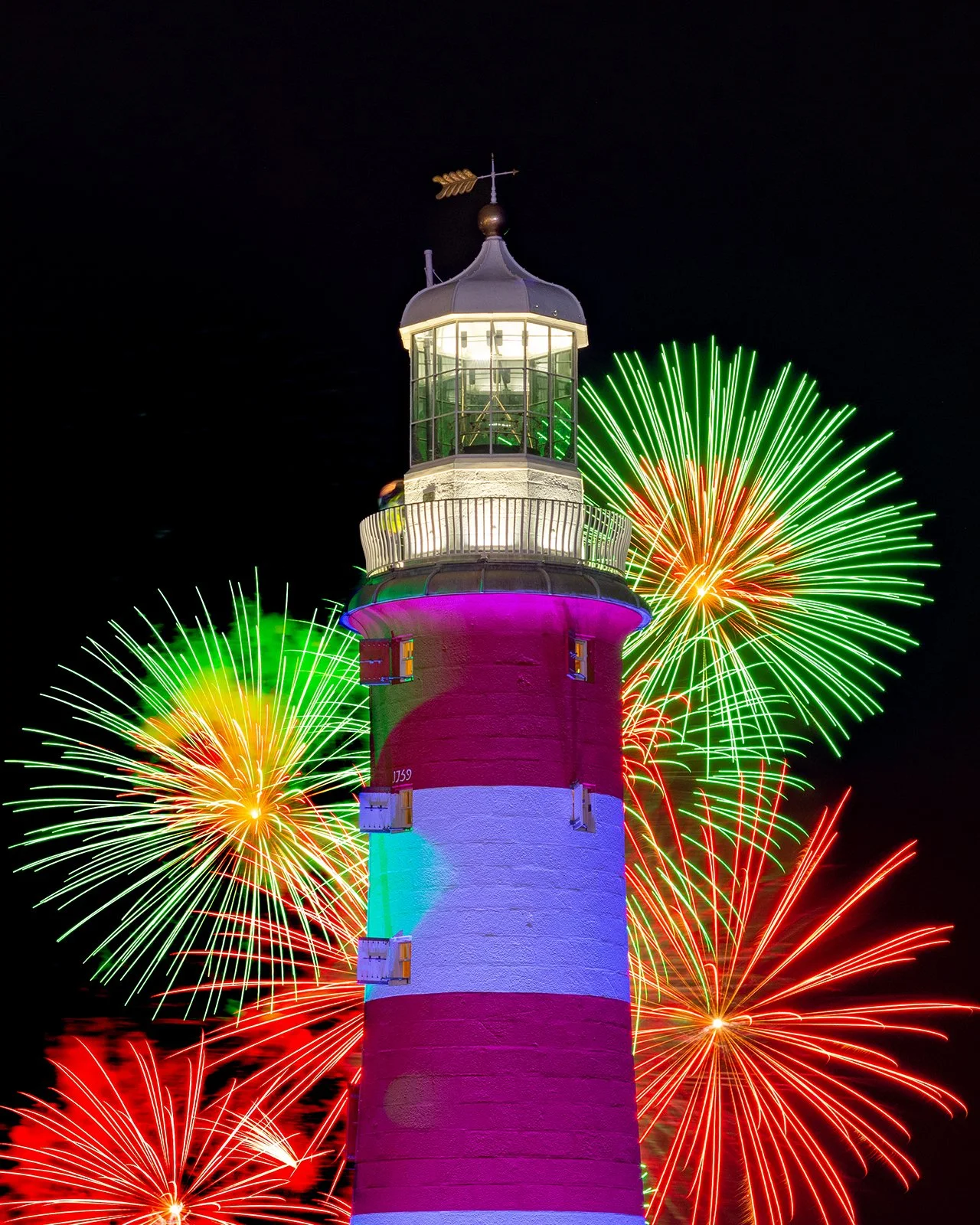
For photographers, framing a pyrotechnic spectacle against iconic landmarks like Smeaton’s Tower is a dream project. However, capturing a crisp, colourful masterpiece rather than a blown out smear of white light requires deliberate preparation.
The salt air of Plymouth Sound carries a palpable hum of anticipation. Thousands line Plymouth Hoe and drape over the cliff edges, waiting for that first jagged flash to tear across the August night sky. When the National Fireworks Championship arrives, it transforms the UK coastline into a dramatic amphitheatre of thunder and light.
For photographers, framing a pyrotechnic spectacle against iconic landmarks like Smeaton’s Tower is a dream project. However, capturing a crisp, colourful masterpiece rather than a blown out smear of white light requires deliberate preparation.
Use this step by step fireworks photography guide to master camera settings, essential gear, and pro timing techniques for the big night.
Essential Gear for Fireworks Photography
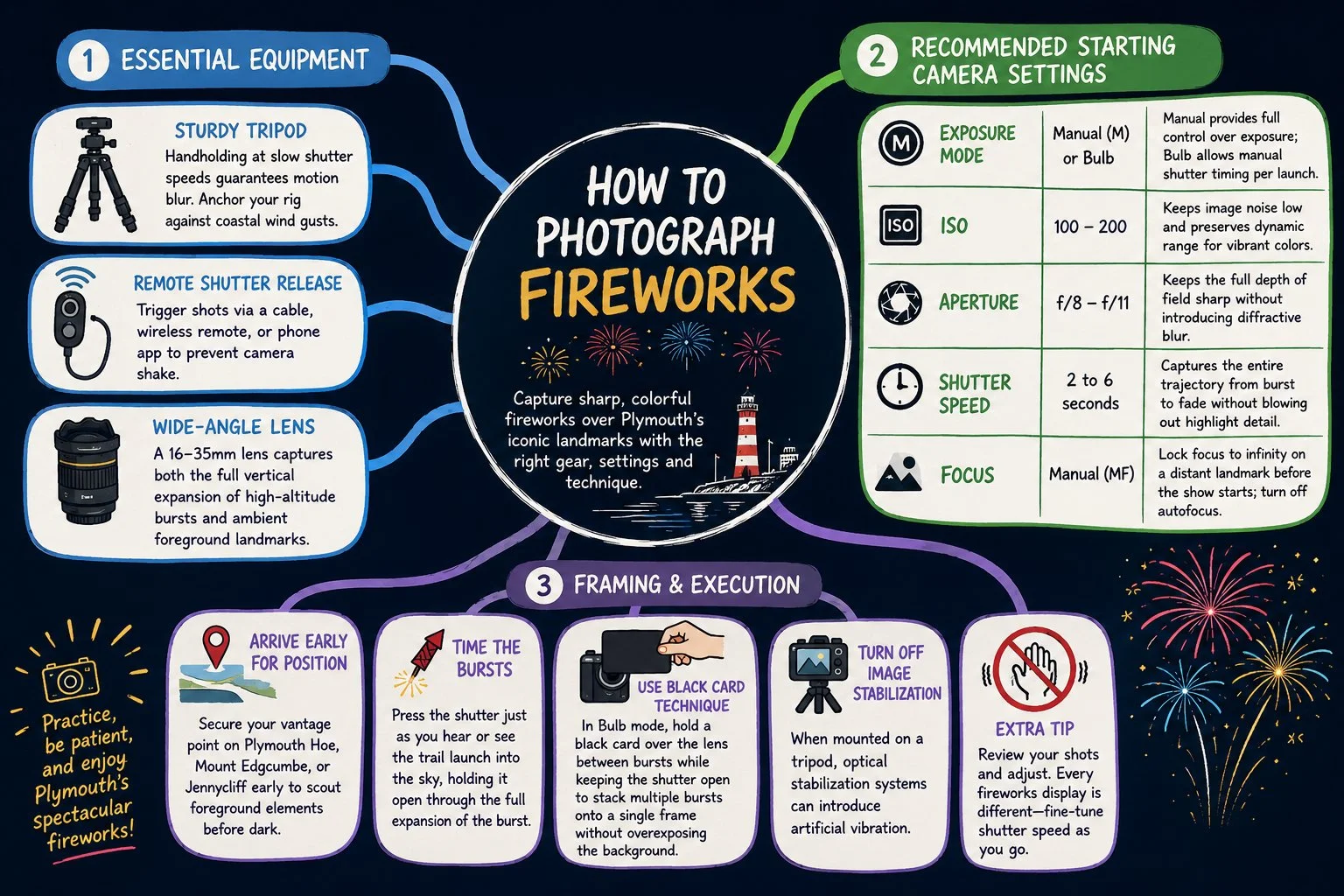
Before heading down to Plymouth Hoe, Mount Edgcumbe, or Jennycliff, pack these critical tools to keep your shots sharp in challenging low light conditions:
Sturdy Camera Tripod: Slow shutter speeds mean handholding is out of the question. A heavy duty tripod anchors your camera against stiff coastal winds.
Remote Shutter Release: Triggering your camera via a cable release, wireless remote, or mobile app eliminates the micro-shake caused by pressing the shutter button manually.
Wide Angle Lens: A 16–35mm lens allows you to frame the high-altitude explosive blooms alongside ambient foreground elements like Smeaton's Tower or Plymouth Harbor.
Best Camera Settings for Fireworks
How to guide for Photographing fireworks
Auto modes struggle in extreme contrast and darkness. To get full control over your exposure, dial in these manual settings before the show starts:
Setting
Recommended Value
Why It Works
Shooting Mode
Manual (M) or Bulb
Manual gives total exposure control; Bulb lets you hold the shutter open for the duration of a burst.
ISO
100 or 200
Low ISO values minimize image noise, preserve dynamic range, and keep colour trails vibrant.
Aperture
f/8 to f/11
A mid range aperture keeps foreground landmarks and fireworks sharply in focus without soft diffraction.
Shutter Speed
2 to 6 Seconds
Captures the entire trajectory, from the initial rocket launch to the trailing fade, without overexposing.
Focus Mode
Manual (MF)
Switch off autofocus. Lock manual focus to infinity () using a distant light source before dark.
Pro Tip: Turn off Image Stabilization (IS/VR) when your camera is mounted on a tripod. The system can accidentally introduce internal vibration when searching for movement that isn't there.
Pro Timing & Composition Techniques
Once the darkness breaks and the first mortars launch into the night, rely on these field techniques to capture pro-level shots:
Scout Your Vantage Point Early: Arrive at Plymouth Hoe hours before dusk. Position yourself to capture high altitude bursts while framing silhouettes, water reflections, or historic monuments in the lower third of your frame.
Time the Rocket Trails: Don't wait for the explosion to click the shutter. Listen for the launcher thump, watch for the streak of light climbing into the sky, and press your remote shutter just before the shell reaches its apex.
Try the "Black Card" Technique: Set your camera to Bulb mode. Hold a piece of black matte cardboard over the front of your lens between bursts while keeping the shutter open. This stacks multiple firework displays onto a single image frame without overexposing the night sky.
Manage Smoke Accumulation: The best photos happen during the first 10 to 15 minutes of the display. As the show progresses, heavy smoke builds up over Plymouth Sound and catches excess ambient light. Shoot your primary hero shots early in the schedule.
Frequently Asked Questions
Should I shoot fireworks in RAW or JPEG?
Always shoot in RAW format. Fireworks feature extreme highlights and deep shadows; RAW files preserve the dynamic range necessary to highlight rich colour trails and lift dark foreground details during post-processing.
How do I avoid overexposed fireworks?
If the centres of your firework bursts appear plain white with no colour, your aperture is too wide or your shutter speed is too long. Stop down your aperture from f/8 to f/11 or shorten your exposure time.
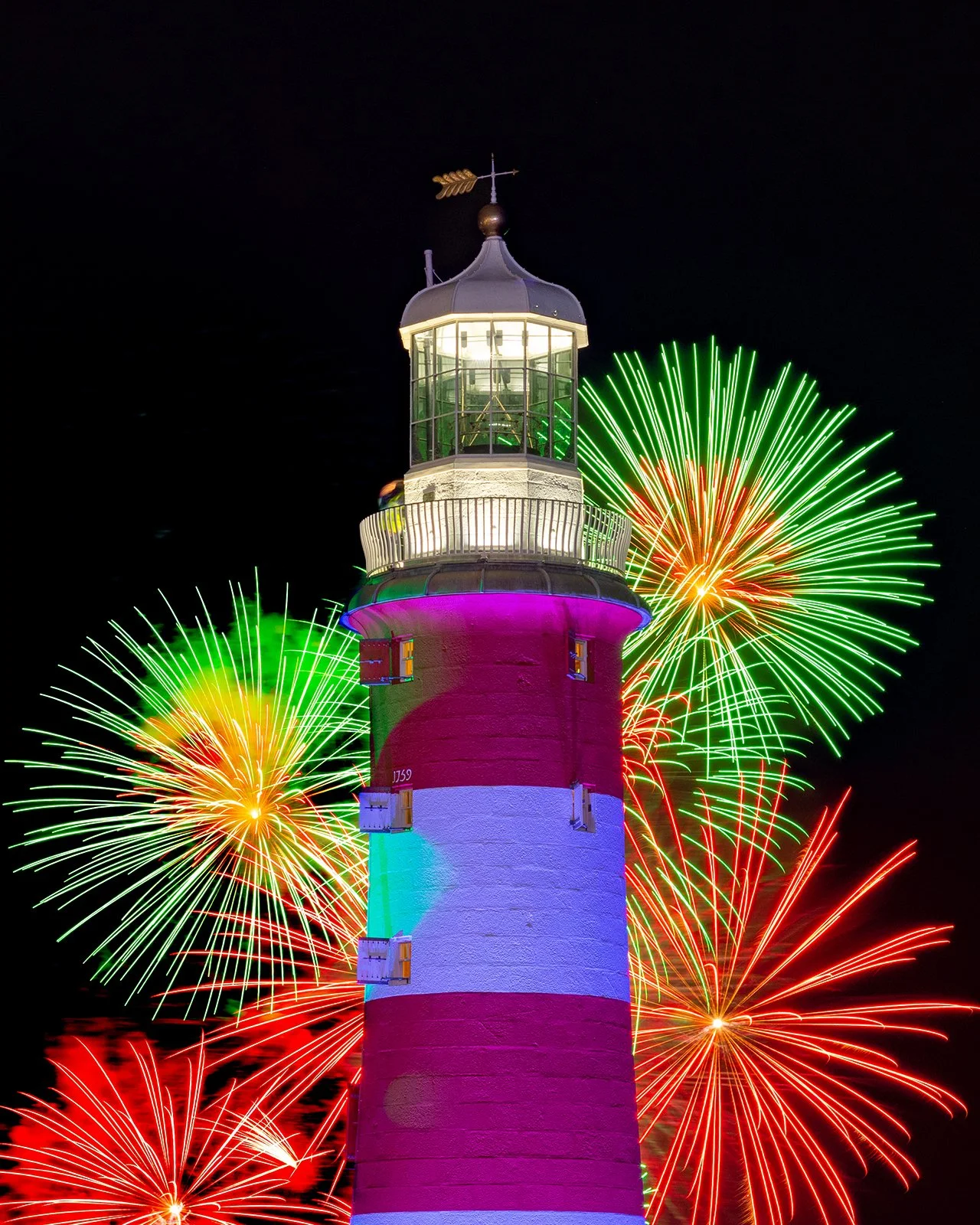
Fireworks explode behind Smeatons Tower Lighthouse

A Guide to Capturing the British Firework Championship
I carefully set up my shot, framing the tower in my viewfinder and waiting for the show to begin. With each boom and flash, I held my breath, hoping to capture the perfect moment. The result? A new photograph, one that's uniquely mine and not just another postcard cliché. It's a reminder that sometimes, the best view is the one you create for yourself, even if it means venturing to a place with a devilish name.
There are certain events in this country that simply cannot be avoided. One of them, if you happen to live in these parts, is the British Firework Championship. It's a time honored tradition that, like an over enthusiastic houseguest, shows up once a year and promptly takes over your entire social media feed with a thunderous barrage of bangs and flashes. It would be churlish, and perhaps a bit antisocial, to resist. And so, I too found myself drawn to the siren call of loud noises and pretty lights.
Years ago, I’d already bagged the classic shot, the one every camera club member from here to the Scottish borders has in their portfolio, of the fireworks exploding in a shower of sparks behind the lighthouse. This time, I decided to be more ambitious. I set myself a new challenge: find a different composition entirely. My grand idea was to zoom in with a long lens and frame Mount Batten tower under a relentless barrage of light.
A quick glance at a map told me that the prime viewing location for this particular bit of photographic genius was from a spot called Devil’s Point, which sounds less like a place to enjoy a convivial evening and more like the kind of place where one might sign away one’s soul. But don’t let the name put you off. It’s actually a perfectly pleasant spot, handily located just across the way from the Royal William Yard, a place teeming with opportunities for a bit of liquid refreshment before the pyrotechnic assault begins. So much so, that I consider it an personal triumph that i managed to actually put the tripod up at all.
I carefully set up my shot, framing the tower in my viewfinder and waiting for the show to begin. With each boom and flash, I held my breath, hoping to capture the perfect moment. The result? A new photograph, one that's uniquely mine and not just another postcard cliché. It's a reminder that sometimes, the best view is the one you create for yourself, even if it means venturing to a place with a devilish name.
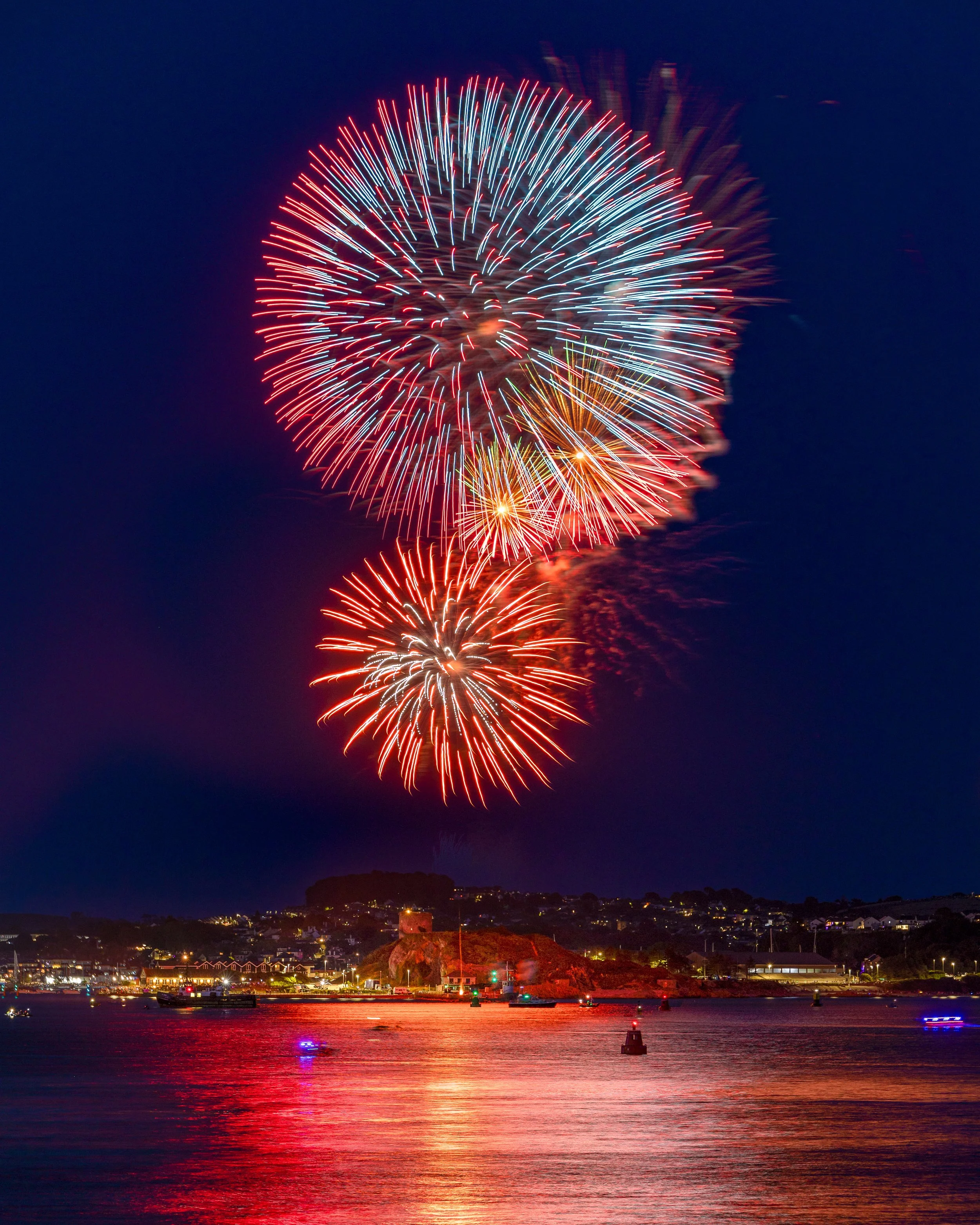
Fireworks over Mount Batten Tower